Oral Probiotics
How Oral Probiotics Fit Into a Healthy Dental Routine
Oral probiotics are one of the most asked-about categories in oral care right now. Here is an educational look at what they are, how the oral microbiome works, and the realistic role a supplement can play.
By Marcus Hale · August 3, 2026 · 10 min read
Key takeaways
- The mouth hosts hundreds of bacterial species; health is about balance, not sterility.
- Oral probiotics are supplements studied for their possible role in supporting that balance.
- Research is promising in places and still developing — they are not a treatment for dental disease.
- A probiotic sits on top of brushing, interdental cleaning and dental visits, never instead of them.
- Talk with your dentist or doctor before adding any supplement, especially with existing conditions.
Probiotics have been part of the gut health conversation for years. More recently the same idea has arrived in oral care, with lozenges, chewables and capsules marketed as supporting the bacteria in your mouth. It is a genuinely interesting area of research — and also one where the marketing has run ahead of the evidence in places.
This article is an attempt at a straight answer: what the oral microbiome actually is, what oral probiotics are supposed to do, what the current research does and does not support, and where a supplement could reasonably fit in a routine that is already working. It is educational information, not medical advice, and no supplement discussed here treats, cures or prevents any disease.
Start with the oral microbiome
Your mouth is home to several hundred species of bacteria, along with fungi and other microorganisms. That is not a hygiene failure; it is the normal state of a healthy mouth. These communities live on teeth, on the tongue, in the pockets around gums and across the soft tissue, and they interact with saliva, with your diet and with each other.
The important shift in thinking over the last two decades is that oral health is less about the presence or absence of particular bacteria and more about the overall balance of the community. When conditions change — frequent sugar exposure, reduced saliva, plaque left undisturbed — the mix can shift towards species that produce more acid or provoke more inflammation. Researchers describe this shift as dysbiosis.
That framing matters, because it explains why the goal of oral care is not to sterilise the mouth. A mouth without bacteria is not achievable and would not be desirable. The goal is to keep the community stable and to stop plaque from maturing undisturbed.
So what is an oral probiotic?
A probiotic is a live microorganism intended to provide a benefit when taken in adequate amounts. An oral probiotic is one formulated to act in the mouth rather than the gut — which is why they are usually delivered as a lozenge, chewable tablet or dissolving form rather than a capsule you swallow whole.
The strains that appear most often in oral formulations include various Lactobacillus species, Streptococcus salivarius strains such as K12 and M18, and Bifidobacterium species. Each strain has been studied for different outcomes, and this is a point that gets lost in marketing: probiotic effects are strain-specific. Evidence for one strain does not transfer automatically to another, even within the same species.

What the research suggests so far
There is a reasonable and growing body of research in this area, mostly consisting of small to medium randomised trials and a number of systematic reviews. Broadly, some studies have reported measurable changes in markers such as plaque scores, gum inflammation indices and levels of certain bacteria associated with decay or breath odour. Some studies have reported no meaningful difference.
Several honest caveats apply. Study sizes are often modest. Follow-up periods are frequently short, which tells us little about long-term effects. Strains, doses and formats vary so much between studies that pooling results is difficult. And a proportion of research is industry funded, which does not invalidate it but does warrant a closer read.
The fair summary is this: some research suggests certain oral probiotic strains may support aspects of oral health as part of a wider routine, and the area is worth watching. It is not settled science, and no reputable summary of the evidence describes probiotics as a replacement for mechanical cleaning or professional care.
What an oral probiotic is not
- It is not a treatment for gum disease, decay or infection. Those need professional diagnosis and care.
- It is not a substitute for brushing, cleaning between teeth or dental visits.
- It is not a fix for persistent bad breath with an underlying cause that has not been identified.
- It is not a whitening product, and it will not remove existing plaque or tartar.
- It is not regulated in the way medicines are, so quality varies between manufacturers.
Being clear on this is not a criticism of the category. It is the difference between a supplement that might add something at the margins and a product being asked to do a job it cannot do.
A supporting habit, not a substitute. ProDentim is a daily oral probiotic supplement meant to sit alongside brushing, cleaning between your teeth and regular dental visits — never in place of them. Learn More About ProDentim (Affiliate link)
Where a probiotic could reasonably fit
If your daily routine is already solid — two minutes of gentle brushing twice a day, cleaning between your teeth once a day, sensible snack timing, regular checkups — then a probiotic is one of the optional extras you might discuss with your dentist. Think of it in the same category as a water flosser or a tongue scraper: potentially useful support, not a foundation.
If your routine has gaps, closing those gaps will do far more than any supplement. It is worth being honest with yourself about which situation you are in, because the temptation to buy an upgrade instead of building a habit is a very human one.
Practical points if you do try one
- Read the label for named strains, not just species — for example S. salivarius K12 rather than simply 'probiotic blend'.
- Check the CFU count and the expiry date; live cultures decline over time and with heat.
- Most oral formulations are designed to dissolve in the mouth, typically after brushing at night, so the strains have contact time.
- Give it a realistic trial period and note what you are actually tracking, whether that is breath, comfort or your hygienist's feedback.
- Keep everything else in your routine constant, or you will not know what changed anything.
Who should be more cautious
Probiotics are generally well tolerated by healthy adults, but they are live organisms and are not appropriate for everyone. People who are immunocompromised, seriously ill, recovering from surgery, or who have central venous catheters or specific medical conditions should speak with a clinician before taking any probiotic. The same applies during pregnancy, for young children, and for anyone taking medications where interactions are a consideration.
This is genuinely a talk-to-a-professional situation rather than a formality. Your dentist and your doctor can weigh it against your actual history in a way an article cannot.
The habits that do the heavy lifting
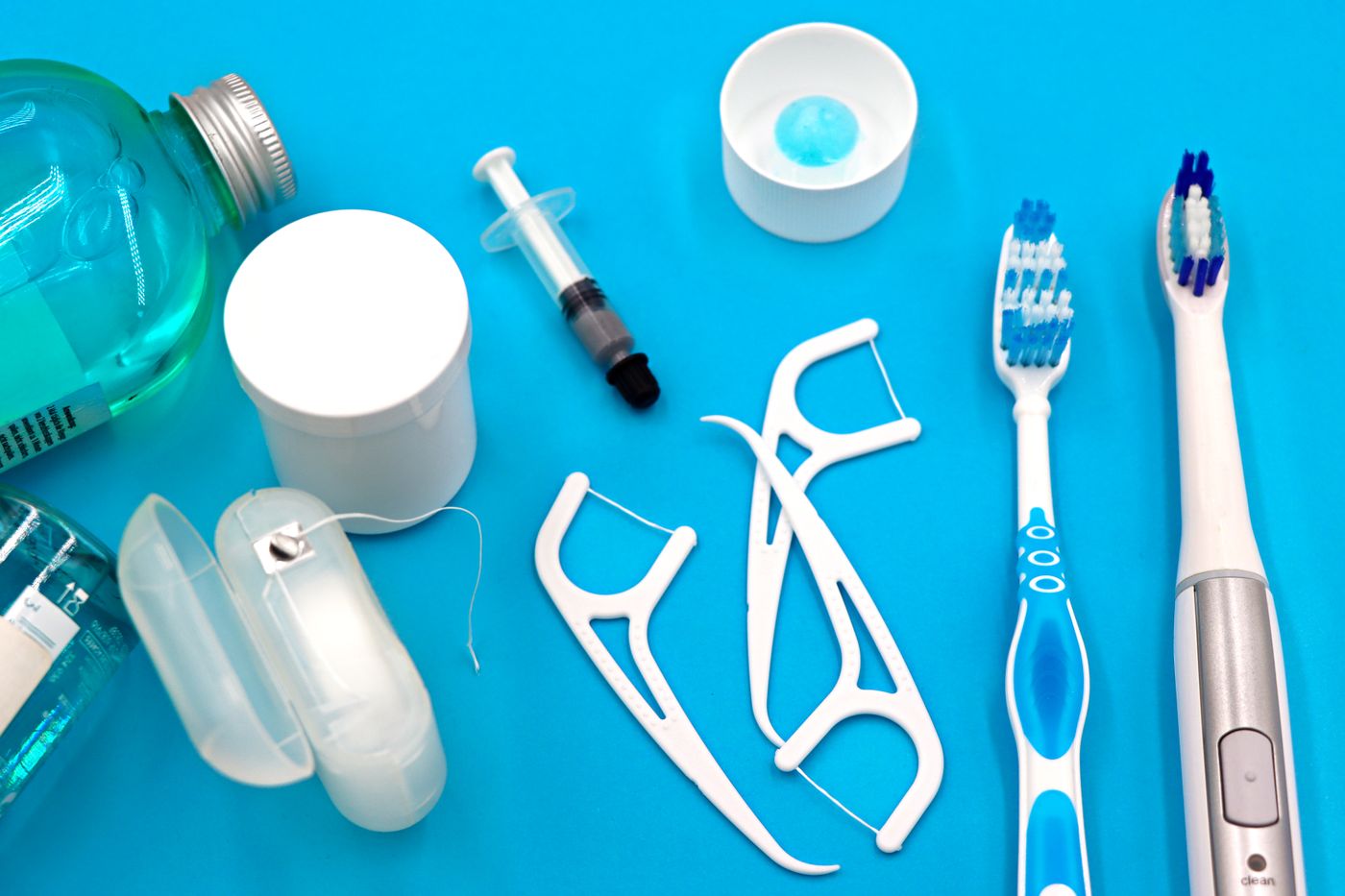
It is worth restating what actually moves the needle for most people, because it has not changed and probably will not: brushing gently for two minutes twice a day with a fluoride toothpaste, cleaning between your teeth daily, keeping sugary and acidic exposures grouped rather than constant, staying hydrated, and attending the checkups your dentist recommends.
Every product in the oral care aisle, including probiotics, is competing for the small remaining margin after those habits are in place. That is not a reason to dismiss the category — margins matter — but it is a useful sense of scale when you are deciding where to spend attention and money.
A reasonable way to think about it
Oral probiotics sit in the space between 'clearly proven' and 'clearly pointless', which is an uncomfortable place for anyone who wants a simple answer. Some research suggests they may support a balanced oral microbiome as part of an overall routine. They are not a shortcut, a cure, or a replacement for the basics.
If you are curious, bring it up at your next appointment. Describe your routine, mention what you are hoping to change, and ask what your dentist would prioritise first. In our experience, the answer is often a small adjustment to technique or timing that costs nothing at all — and if a supplement still makes sense after that, at least you will be adding it on top of something solid.
Frequently asked questions
- What is an oral probiotic?
- A supplement containing live microorganisms formulated to act in the mouth rather than the gut, usually as a lozenge or chewable tablet so the strains have contact time with oral surfaces.
- Do oral probiotics replace brushing?
- No. Nothing replaces mechanical cleaning. Probiotics are studied as a possible addition to a routine built on brushing, cleaning between teeth and regular professional care.
- How long would someone typically take one before judging it?
- Studies vary widely, often running from a few weeks to a few months. If you try one, keep the rest of your routine unchanged so you can attribute any difference, and discuss the plan with your dentist.
- Are oral probiotics safe?
- They are generally well tolerated by healthy adults, but they are live organisms. People who are immunocompromised, seriously unwell, pregnant, or taking certain medications should speak with a clinician first.
- Can a probiotic help with bad breath?
- Some studies of specific strains have reported changes in markers linked to breath odour, but results are mixed and persistent bad breath can have causes that need diagnosis — including gum disease, dry mouth, sinus issues or digestive factors.

Written by
Marcus Hale
Health writer & product researcher
Marcus is a health writer who has spent the last eight years translating clinical guidance into everyday reading. He handles our product research and comparison pieces, and is unusually interested in how people actually keep a routine going on a busy Tuesday night.
Join the Sarah Wellness Corner Community
Receive practical oral care tips, healthy habits, educational articles, and wellness inspiration.
Related articles
Oral Microbiome In 60 Seconds
No jargon, no supplements, no dramatic claims. Just the short version of what is actually going on in your mouth.

10 Daily Habits That Help Keep Your Smile Healthy
Healthy teeth are rarely the result of one big change. They are the result of ten small things repeated on ordinary days. Here is what dental professionals talk about most often — and how to make each habit realistic.

Your Mouth Has Good Bacteria Too
Almost everything marketed to us frames the mouth as a battlefield. The actual picture is a mixed community, and that changes how I think about my routine.

The Mouth Bacteria Nobody Told Me About
I had thirty years of dental appointments before anyone mentioned that my mouth contains a community rather than a problem.

Probiotics For Teeth: Real Or Hype?
Somewhere between 'this is nonsense' and 'this changes everything' there is a much less exciting answer, and that is the one I have landed on.

Gut Health And Gum Health Are Linked
The mouth is the start of the digestive tract, which is obvious once said and changes how the two are usually discussed separately.