Teeth Whitening
What The Zing After Whitening Strips Actually Is
The jolt when cold water hits is not the whitening working. It is a signal about the tiny channels running through the tooth — and once that lands, the whole category reads differently.
By Sarah · August 8, 2026 · 9 min read

Key takeaways
- The cold-water zing is a signal from the tiny channels running through the dentin, not evidence that a product is working.
- Strips act on surface stain. Once that is lifted, there is nothing further for them to act on, which is why results plateau.
- Charcoal removes stain by abrasion, and abrasion is not selective about what it removes.
- Enamel does not grow back. It is the one genuinely irreversible item in this category.
- Dull is not the same as stained, and the two need completely different responses.
- Sensitivity that persists is worth a dental appointment rather than a change of product.
The zing when cold water hits is not the whitening working. I believed for years that it was — that the jolt was a sign something was happening, the way muscle ache is a sign of a workout. It is not that at all, and understanding what it actually is changed how I thought about the whole category.
This is what the sensation is, why strips give you a noticeable result the first time and much less by the fourth, and the one thing on this list that does not come back once it is gone.
Why strips work at first and then plateau
Whitening strips act on stain sitting on and just within the outer surface of the enamel. The first course lifts the accumulated surface staining of the last few years, which is why the initial result is usually the most dramatic one anybody gets.
The trouble is that once that surface stain has been lifted, there is nothing further of that kind for the product to act on. What remains is the natural colour of the tooth, which is largely the colour of the dentin layer showing through translucent enamel. That is not stain. It does not respond to a product designed to lift stain, and it does not matter how many more courses you run.
So the pattern people describe — dramatic, then good, then barely noticeable, then nothing — is not the product degrading or your teeth becoming resistant. It is the product finishing the job it can do and then continuing to be applied to a different problem.
The zing, explained
Beneath the enamel is dentin, and dentin is not solid. It is threaded with thousands of microscopic channels running from its outer edge towards the nerve at the centre of the tooth. These are called dentinal tubules, and they are filled with fluid.
When something causes that fluid to move suddenly — a temperature change, pressure, certain chemicals — the movement is detected at the nerve end and registers as that sharp, brief, electrical jolt. That is the zing. It is a fluid-movement signal, not damage happening in real time.
Whitening agents can temporarily increase how permeable the tooth surface is, which makes those channels more exposed to the outside world for a while. That is why sensitivity often appears during a course of strips and settles down in the days after stopping.
The useful thing to understand is what the signal means. It means the channels are more open than they were. Temporary, after a course, is one thing. Persistent, or arriving without any obvious cause, is worth someone looking at — because thinning enamel, gum recession exposing root surface, and a cracked tooth can all produce the same sensation, and only one of those settles on its own.
What tends to help while it settles
- Stopping the treatment rather than pushing through a course.
- A toothpaste formulated for sensitivity, which works by occluding those channels over a couple of weeks. It needs consistent use to do anything.
- Avoiding very cold drinks for a few days, mostly for comfort.
- Not brushing harder, which is the instinct and makes it worse.
Charcoal: what it removes, and what else it removes
Charcoal toothpaste does remove surface stain. I want to be fair to it about that, because dismissing it outright is not accurate. It removes stain by being abrasive — physically scrubbing material off the tooth surface.
The difficulty is that abrasion is not selective. It has no way to remove stain and stop at the enamel. Used occasionally, that is a minor consideration. Used twice a day for years, on a surface that does not regenerate, it is a different proposition — and that is why a lot of dental professionals are cautious about daily use.
Most charcoal products also contain no fluoride, so a person using one exclusively has quietly swapped a preventive routine for a cosmetic one without necessarily realising it.
This is worth asking your own dentist about specifically, because how much abrasion matters depends on how thick your enamel is now, and that is not something you can assess by looking in a mirror.
Enamel does not grow back
This is the one genuinely irreversible thing in this whole category, and it deserves a plain sentence to itself.
Enamel has no living cells in it. Bone remodels; skin repairs; enamel does neither. Minerals can be redeposited into its surface, which is what remineralisation means and what fluoride supports, but a layer that has been worn away is not rebuilt. When someone sells you something that claims to restore or regrow enamel, that claim is not describing anything that happens.
Which reframes the whole cost-benefit of this category. A whitening result is temporary and repeatable. Enamel loss is permanent and cumulative. It is worth being a little conservative with something you only get one allocation of.
A supporting habit, not a substitute. ProDentim is a daily oral probiotic supplement meant to sit alongside brushing, cleaning between your teeth and regular dental visits — never in place of them. Learn More About ProDentim (Affiliate link)
Six habits that quietly wear it down
- Brushing immediately after anything acidic, while the surface is briefly softened.
- Abrasive pastes used daily rather than occasionally.
- A hard-bristled brush, or a soft one used with real force.
- Stacking treatments — strips, then a whitening paste, then a whitening rinse, all at once.
- Running courses back to back rather than leaving long gaps.
- Grinding at night, which many people do without knowing, and which wears enamel faster than anything else on this list.
That last one is worth raising at your next appointment, particularly if you wake with a tight jaw or a dull headache. It is easy to check for and there are straightforward ways to manage it.
What to do when teeth are dull rather than stained
Telling the two apart is the whole game, and it is not difficult once you know what to look at.
Stain tends to be uneven — heavier near the gum line, between the teeth, in the grooves. It has usually appeared over a period you can connect to something. Dulling is even across all the teeth, has arrived slowly, and has no obvious cause.
If it is dulling rather than stain, more whitening is the wrong tool. What actually helps is anything that protects what enamel remains, plus accepting that natural tooth colour varies between people and changes with age in the same way hair does. Professional options exist and a dentist can talk you through what is realistic for your teeth specifically, which is a better conversation than another box from a pharmacy.
I found the shift genuinely freeing, in a small way. I stopped measuring my teeth against a shade I was never going to reach and started paying attention to whether my mouth was actually healthy, which turned out to be both more achievable and more interesting.
How long a result actually lasts
This is the question nobody answers on the packaging, and it changes the arithmetic considerably.
Whatever lifted the stain has not changed anything about your habits. If you drink coffee every morning, the surface stain begins accumulating again the day you finish the course. Most people describe a result that holds well for a few months and then drifts back toward where it started over the following six to twelve.
Which means whitening is not a one-off purchase but a recurring one, and the honest way to think about the cost is per year rather than per box. Understood that way, some people conclude it is worth it, and that is a perfectly reasonable conclusion. What I would avoid is drifting into permanent use without ever having done that sum — running courses back to back, on a surface that does not regenerate, chasing a result that was always going to fade.
The variable that actually extends a result is the same unglamorous list from every other article on this site: rinse with water after dark drinks, wait before brushing, clean between the teeth. None of it sells anything, which is presumably why it appears on so few boxes.
A note on shade guides
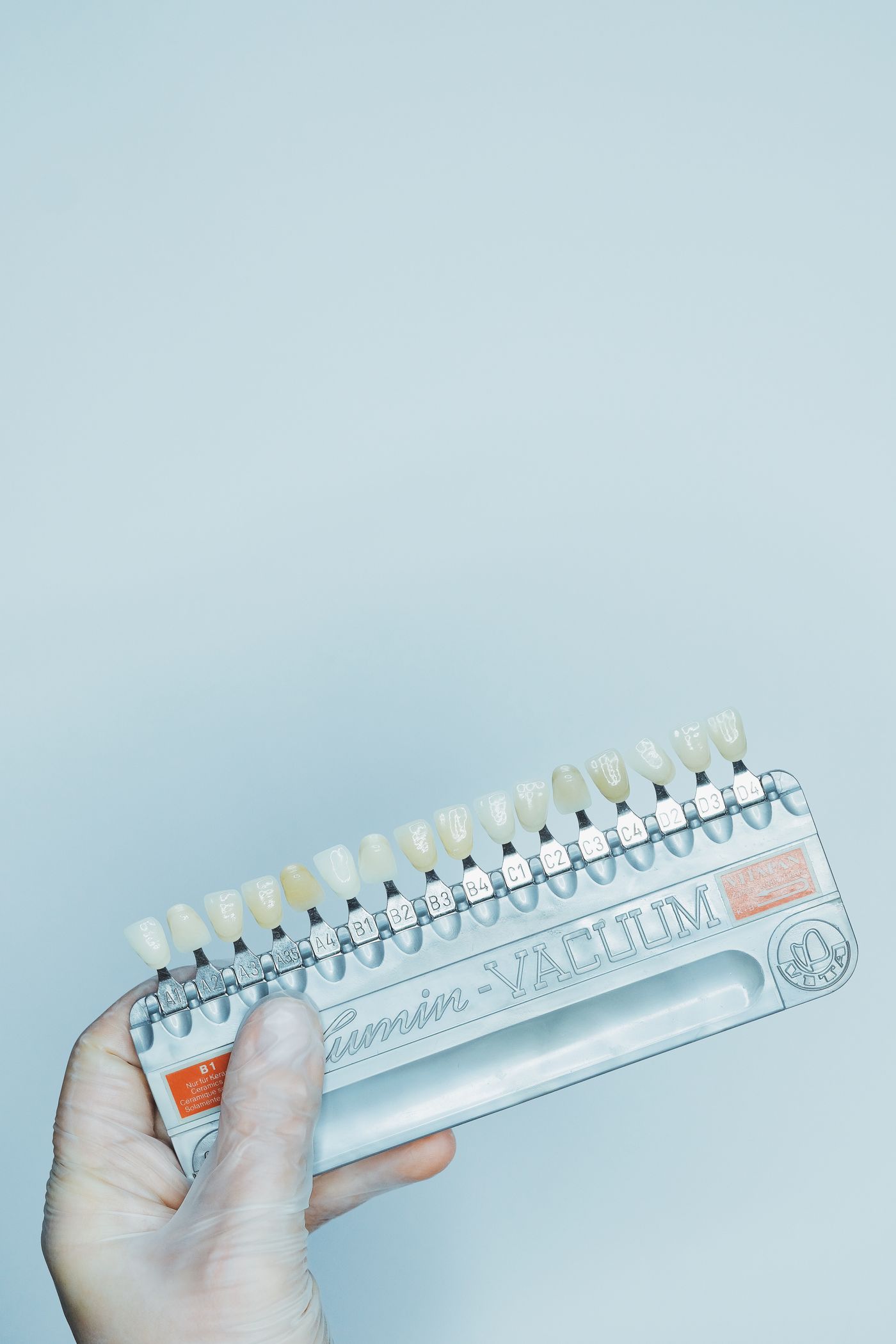
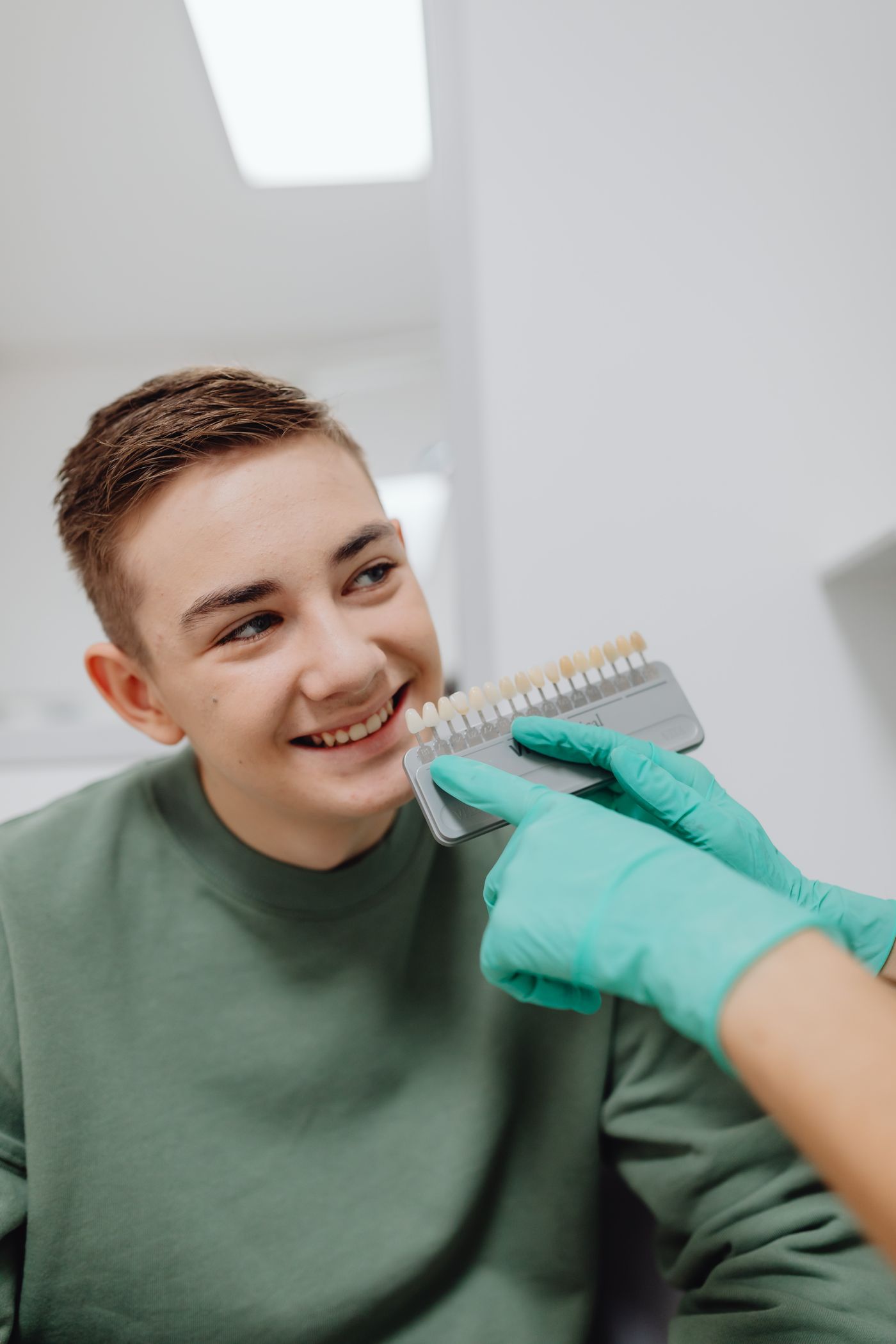
The shade strips that come with home kits are useful for noticing change and are not a measurement. Lighting, time of day and how hydrated your teeth are all shift the reading — teeth genuinely appear lighter when slightly dehydrated, which is why the result immediately after a treatment tends to look better than the result two days later. If you want to track it, photograph in the same place at the same time of day, and compare over months rather than days.
When to ask a dentist first
I am not a dentist and this is general information rather than clinical advice. A few situations really are worth asking before starting anything:
- Existing sensitivity, before rather than after a whitening course.
- Crowns, veneers or fillings on front teeth, which do not change colour with the natural teeth around them and can end up mismatched.
- Gum recession, since exposed root surface behaves differently from enamel.
- One tooth darker than its neighbours, which is a different situation entirely.
- Any pain, as opposed to the brief zing described above.
Where this went for me
Once I understood that I had been sanding away at something that does not grow back, I stopped chasing the shade of my teeth and started paying attention to the condition of my mouth. It took me longer than I would like to admit, and it changed what I spend money on.
Frequently asked questions
- Why do whitening strips stop working after a while?
- They act on surface stain, and once that is lifted there is nothing further of that kind for them to act on. What remains is the natural colour of the tooth showing through translucent enamel, which is not stain and does not respond the same way.
- Is charcoal toothpaste bad for enamel?
- It is abrasive, which is how it removes surface stain, and abrasion is not selective about what it removes. Many dental professionals are cautious about daily use for that reason, and most charcoal pastes also contain no fluoride. It is worth asking your own dentist about your enamel specifically.
- Is the zing after whitening dangerous?
- A brief jolt during a course that settles within a few days after stopping is common and generally not a cause for alarm. Sensitivity that persists, or that appears without any obvious trigger, is worth having looked at, because several different things produce the same sensation.
- Can enamel be rebuilt?
- Minerals can be redeposited into the enamel surface, which is what remineralisation means. A layer that has been worn away is not regrown — enamel contains no living cells. Any product claiming to restore or regrow enamel is describing something that does not happen.

Written by
Sarah
Wellness writer — founder of Sarah Wellness Corner
Sarah is a pen name. She is a wellness content creator writing from a consumer's perspective, not a clinician's — she is not a dentist, dental hygienist, doctor or medical professional of any kind, and holds no clinical qualification. Her articles are personal experience and general education, written after reading widely and changing her own habits over several years. They are not medical advice and are not a substitute for a consultation with a qualified dental professional. Identifying details in the personal stories on this site have been changed; the experiences are real, the names and specifics are not.
Join the Sarah Wellness Corner Community
Receive practical oral care tips, healthy habits, educational articles, and wellness inspiration.
Related articles

Common Reasons Your Gums May Feel Sensitive
Tender gums are common, and the cause is often something ordinary. Here is a plain-language walk through the usual explanations, what tends to help, and the signs that mean it is time to book an appointment.
The Drinks And Foods That Stain Teeth, And What To Do About Each
Nobody is giving up coffee, and they should not have to. Every item on this list has a fix — and part of what people try to scrub away is not stain at all.

The Order Your Oral Routine Should Actually Follow
I did the same three things every night for twenty years in the wrong order, and the last one was undoing part of the first. Every fix here is free.
Whitening Mistakes That Damage Enamel
Most enamel damage from whitening does not come from one dramatic mistake. It comes from several reasonable-sounding habits stacked on top of each other.

Charcoal Toothpaste: Read This First
It looks dramatic, it feels like it is doing something, and that is most of the appeal. Here is what I wish I had understood before I bought my first tube.

Whiter Teeth Without The Zingers
The sharp, electric jolt when cold air hits a tooth is the reason most people abandon whitening. It is also the part that is most avoidable.